
The Waltherian Tradition of Ministry (Part I)
Why the Apostolic Succession Debate Matters (Rev. Heath R. Curtis)
The “Waltherian Tradition” Defined
C. F. W. Walther (1811-1877) was first President of the Lutheran Church-Missouri Synod. It is contended here that Walther’s formal doctrine of ministry in the Church – what I refer to as the “Waltherian tradition” – has been authentically preserved in the doctrinal literature of the LCMS. The Waltherian tradition comprises the following points, or affirmative theses:
- Christ gave the Office of the Keys (in the words of the Small Catechism, the authority to forgive the sins of the repentant, or “loose”; and withhold forgiveness from the unrepentant, or “bind”) to the Church, to be effectively used by the governing body consisting either of laity and clergy or laity alone (e.g. lay voters’ assembly of a congregation, Consistory)
- The authority of the Keys is communicated to the lay governing body (i.e. of a congregation) “immediately”; this authority can only be said to be vested in clergy, or bearers of the Office of the Ministry, mediately through the lay governing body.
- Bearers of the Office dare not exercise the authority either to “bind” or to “loose” (with special attention to the latter) without assent of the laity.
- Bearers of the Office exercise no function that is not the common right of every baptized Christian, but merely, for the sake of good order, perform them as though on behalf of every member of the congregation.
- The Office of the Ministry is not transmitted through the rite of Ordination and the involvement of other bearers of the Office, but merely comes into existence by the consent (“call”) of the local congregation.
- Ordination, while advisable whenever possible, is an adiaphoron not to be considered a means of grace.
Each of these points may be observed in Walther.
By way of further definition, the following negative theses are denounced by Walther and others in the Waltherian tradition:
- The authority to forgive sins is reserved to members of the clergy, or bearers of the Office of the Ministry.
- The lay governing body (i.e. of a congregation) transmits (“ubertragen“) the Office in such a way that it surrenders its inherent right to exercise both the binding and loosing authority.
- Bearers of the Office have regulative authority apart from the Word of God; the lay governing body has the authority to contradict the Word of God.
- Those without a call (understood locally), whether laity or ordained clergy, are able to perform every function of the Office.
- Hierarchical organization is to be eschewed (strict congregationalism).
- The Office of the Ministry is indistinguishable from the common priesthood (cf. I Pet. 2:9) of which it is merely an expression.
Nonetheless, it is further contended that core components of this Waltherian tradition represent a departure from the modus loquendi of the Lutheran Confessions and rest on questionable Scriptural support.
The bulk of what follows is a compendium of citations in this support, with annotated comments from myself (Father Heide). Key passages have been boldened for ease of reading.
Robust Treatment of Walther
The point over which the status and exercise of clerical authority in the Waltherian tradition comes into clearest relief (and greatest controversy) is the Office of the Keys, particularly the “binding authority” (see Affirmative Thesis 3 above).
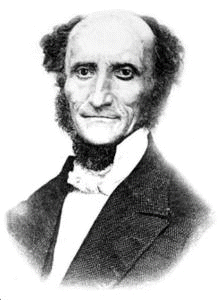 Beginning with Walther’s Summary of Christian Doctrine, Sixteen Theses, 1872:
“When He gives the keys to Peter, He does not give them because Peter is an apostle, but be cause he is a believer. In Matthew 18:18, the keys of the kingdom are clearly ascribed to the Church: Whatever you [that is, you Christians] bind… [or] loose,” for the Savior is there speaking of the whole congregation. Paul, in 1 Corinthians 5:2, censures the whole congregation for having omitted to exercise the power of the Keys by excommunicating the incestuous person; therefore, the whole congregation must have been in possession of the power.”
“It is, therefore, also clear from our thesis that the Church is not to let its pastors or bishops do as they please in their office, because that office is not a property of the persons administering it, but it belongs to the Church, and hence the Church, as being the true owner, is held to exercise a strict supervision as to how its ministers employ its precious prerogative. If all the pastors in the Church at any time should die or turn heretics, would not the Church then still have the Keys and the Office?”
“Christ has not, as Romanizing Lutherans have said, given the power of the Keys to a certain order of men who exercise the same “for the benefit of the Church,” but He has rather given it, immediately, to the Church itself, whilst the elected pastors exercise their office in the name of the Church.”
Walther’s Works: Church Fellowship (St. Louis: Concordia, 2015), pp. 213-4
Below, from Walther’s Pastorale:
“Nevertheless, the preacher should above all keep in mind regarding the exercise of church discipline that he has no authority in any instance to carry out excommunication on any person unilaterally and without preceding hearing and decision by the congregation. Here the well-known axiom is doubtlessly valid: “Whatever concerns everyone – especially in matters of salvation – must also be attended to by everyone.” It is already against all reason and justice for one person to decide in what relation one member should stand to the whole and the whole to one member, especially when this has to do with the relationship between brothers in the faith. In addition, not only the preacher but the entire congregation is explicitly rebuked in God’s Word for neglecting excommunication, and they are told: “Purge the evil person from among you!” (1 Cor. 5:1-2, 13)”
“Finally, Val. Ernst Loscher writes: “In our church no one has ever said that excommunication and discipline belong only to the clergy; instead, it is commended by Christ to the Church. The latter decides and decrees, and the ministers of Christ, as the mouth of the Church, proclaim this to the sinners … that is, the administration or execution of the binding key…”
Walther’s Works: Pastoral Theology (St. Louis: Concordia, 2015), pp. 381-4
“Regarding [the fact] that according to God’s Word excommunication must be enacted by the preacher alone, but must be decided by the entire congregation, cf. above” (p. 411)
“However, the contradiction between these last statements and the ones cited above is only an apparent one. The following passage in the church order of Württemberg, known as the Cynosura, is among those that resolve this apparent contradiction: “Ministers may advise against Communion, forbid it, or suspend [from it] by way of request, but no minister should exercise public excommunication by his own authority” (see M. S. Eckhard, Pastor conscientiosus genuinus, p. 177). Thus it is well within the authority of a preacher to “advise against” Communion for someone, even to “forbid” in the name of the Lord or “suspend by way of request” someone who is clearly impenitent or unreconciled. However, if such a person is unwilling to obey it, and if he protests against the judgment of the pastor, then the [pastor] should not regard himself as the highest judge in this. Instead, he should immediately report the case to the presbytery, consistory, or congregational assembly – depending on the existing constitutional form – so that the final verdict about it is rendered by this body.”” (pp. 193-4)
To the suggestion that Walther restricts the binding key to the laity alone, a counterpoint may be raised that Walther allows for other possibilities than a congregational vote in deciding how to exercise the keys.
The representative alternative example put forth is a “consistory” – calling back to the years following the Lutheran Reformation, one consisting of state-appointed supervising clergy and, among the laity, lesser magistrates (“emergency bishops”). The mere fact remains, however, that in Walther the scenario is imagined (and assumed to be normative) in which unanimous consensus among the laity precedes the judgment of the pastor.
Yet elsewhere in the same work (Pastorale), Walther clarifies his position on “ministeria” consisting exclusively of clergy. He regards such alternative models of governance as provisional and therefore does not seem to recommend them as normative for future American projects in ministry:
“Even here in America, where the church is independent of the state, the corporate rights are therefore mostly exercised in Lutheran congregations by presbyteries composed of preachers and laypeople, even by ministeria, whose members are only pastors, because it was believed that presbyteries, even ministeria, correspond to the German consistories as the authentic Lutheran constitutional institution. However, this is an error … The first constitution of our German Lutheran Church was only a stopgap measure and temporary arrangement by Luther and his co-workers.” (p. 434)
In a passing reference to the “antichrist,” Walther renders most succinctly his position. The figure of Diotrephes (mentioned only in the verses cited) is never identified as either clergy or lay.
“By using excommunication on his own authority, Bishop Diotrephes revealed himself to be a precursor of the antichrist already in apostolic times (3 John 9-10).” (p. 382)
A clear case of eisegesis is observed. Walther’s interpretation did not become standardized.
Finally, from Walther’s Form of a Christian Congregation:
“Regarding the publication of the excommunication and its consequences Baldin writes: “Let the pastor announce to the congregation from the pulpit, that the person [excommunicated], though admonished repeatedly, contumaciously persisted in a manifest sin (which is to be mentioned by name); that, since this cannot be committed without great offense to the congregation and solved in a gathering of those who were delegated to act in this matter [in our case, the voters’ meeting] that the person should be cast out of the congregation”
The True Visible Church and The Form of a Christian Congregation. Trans. John Theodore Mueller. St. Louis: Concordia, 2005, p. 121
“No one is to be regarded as one who has been excommunicated until the church or congregation has passed sentence. This fact is attested and defended by Calov against the Arminians when he writes…” “It is wrong therefore to say that here no power is given to the congregation, for here we have the definite stipulation: ‘If he shall neglect to hear them (the two or three whom he has taken with him), then tell it to the church.’ If he refuses to hear the church, then regard him as a heathen man and a publican according to the sentence of the congregation and in agreement with it (for the final verdict after the degrees of admonition is here accorded to the congregation)” (p. 118)
On such grounds rests the ninth of Walther’s “Theses on the Ministry” which were received as official by the LCMS in 1851. It is worth acknowledging that the mode and manner of their “official” doctrinal authority is a matter of ongoing debate and discussion.
Reverence and unconditional obedience is due to the ministry of preaching
when the preacher is ministering the Word of God. However, the preacher
may not dominate over the Church; he has, accordingly, no right to make
new laws, to arrange indifferent matters and ceremonies arbitrarily, and to
impose and execute excommunication alone, without a previous verdict of
the entire congregation.Reprinted from the Appendix of the CTCR report on The Ministry: Offices, Procedures,
and Nomenclature (September 1981)
Thus far Walther. From the foregoing, Affirmative Theses 1, 2, and most significantly, 3 are plainly deduced.
The Modus Loquendi of the Lutheran Confessions
As a reminder and introduction: with regard to orthodox Lutheran doctrine, the Confessions published in the Book of Concord of 1580 are the norma normata, that is, “normed norm” (the norma normans, “norming norm,” being Holy Scripture alone, following the principle of sola Scriptura). The Confessions speak markedly differently than Walther about the Office of the Keys.
Beginning with the Lutheran Church’s foundational document, the Unaltered Augsburg Confession of 1530, prefaced by the equally central Small Catechism:
“I believe that when the called ministers of Christ deal with us by His divine command, in particular when they exclude openly unrepentant sinners from the Christian congregation and absolve those who repent of their sinsand want to do better, this is just as valid and certain even in heaven, as if Christ our dear Lord dealt with us Himself.” (Small Catechism IV; LSB, p. 326)
“Our people teach as follows. According to the gospel the power of the keys or of the bishops is a power and command of God to preach the gospel, to forgive or retain sin, and to administer and distribute the sacraments.” (Augsburg Confession XXVIII 5-6; KW)
Moving on to the Smalcald Articles of Bl. Martin Luther (1483-1546). Significantly, these exclusively among the Wittenberg professor’s writings (aside from the Catechisms) enjoy normative doctrinal authority. The Treatise on the Power and Primacy of the Pope is a well-known appendix to them. They succinctly treat binding authority, or excommunication, in practical terms:
“The preachers should not mix civil punishments together with this spiritual penalty or excommunication.” (Smalcald Articles III X 1)
“Again our Confession declares: “It is certain that the common jurisdiction of excommunicating those guilty of manifest crimes belongs to all pastors. This the bishops have tyrannically transferred to themselves” …
(Treatise on the Power and Primacy of the Pope 74)
Be it observed how the Confessions (though not without nuance, as will to be treated below) regard clergy as the sole subject, not of “exercise” or use only but also the authority of the Keys. It would seem that both the loosing and binding authority rest with the “bishop” (or pastor) without reference to any prevention by an outside party (e.g. Pope, canonical bishop, or – one may infer – lay governing body).
Concordia Seminary (St. Louis, Missouri) professor Robert D. Preus (†1995) makes a startling admission in this connection. In his reader-friendly companion to the Book of Concord titled Getting into the Theology of Concord, Preus labours to reconcile the witness of the Confessions and Scripture according to the standardized interpretation of Matthew 18:15-20, a locus classicus among Lutheran dogmaticians regarding the keys.
“It is interesting that Melanchthon above says that it is within the province of the pastor as he publicly administers the keys to excommunicate impenitent sinners (cf. AC, XVIII, 2). This might seem to be out of harmony with the Lutheran practice in our country, where the congregation has pretty well reserved that prerogative to itself, although no doubt in those days the pastor was always acting on behalf of the congregation and as its representative. I can find no evidence in our Confessions that congregations or synods as such carried out excommunication, and Matt. 18:15-20 is never used in our Confessions as a model for congregational discipline or excommunication, although this may have been an oversight.”
Robert Preus, Getting into the Theology of Concord (St. Louis: Concordia, 1977), p. 61
The possibility of “an oversight” on the part of Luther or Philipp Melanchthon (1497-1560) seems fanciful or contrived. As seen above, both Confessional authors speak so unreservedly of the clergy as judging and administering (“exercising”) excommunication that one must demand an explicit denial that they are doing so on their own authority. Absent such witness, external doctrinal formulations are not to be received uncritically.
The protest is raised that the Confessions must be interpreted by authorial intent – though, it may never be conceded, over and against the plain grammatical sense; they are in all events con-fessions, that is, they render the words by which we “speak together”. This author hardly disagrees with the first principle (the Treatise will be so scrutinized further below based on internal witness). The latter principle, however, ought to be applied in this way: that the modus loquendi of the Confessional writings be adopted for doctrinal formulation. They may be clarified but never in any wise corrected (altered) or contradicted by either undue ambiguity or specificity in non-Confessional writings.
Thusly, doctrines, notions, language and suggestions latent in the broader corpus of their authors are to be judged and, if necessary, even censured or repudiated, by the Confessions and not vice versa. (The careful reader is referred to the Epitome of the Formula of Concord, Comprehensive Summary, pars. 4-5 and 8.)
The Prevalence of the Waltherian Tradition in American Pastoral Training
In the (North) American Lutheran context, the Waltherian principle has been enshrined as the normative application of the Scriptural and Confessional witness (though not without nuance or complication which will be treated where applicable).
The most recent textbook on pastoral theology and practice to emerge from Concordia Publishing House (CPH), the publishing arm of the LCMS, unequivocally applies Walther’s principle: that the pastor lacks the binding authority (Affirmative Thesis 3). In doing so, Richard Warneck even goes beyond Walther to assert, not merely that the pastor exercises or enacts the binding key but, as he concludes:
“When the Church’s governing assembly convenes for excommunication, the pastor reviews the situation … The Church excommunicates with a resolution to this effect, supported by the unanimous decision of the assembly. If any person in the assembly dissents, they should either show just cause for their dissent or be admonished for obstructing the Church’s action. When the Church excommunicates, the pastor announces it to the larger congregation. He speaks in the Lord’s name and in His stead (John 20:23). The congregation – the Church in action – has formally bound the sin of the impenitent person (Matt 18:18).”
Richard H. Warneck, Pastoral Ministry: Theology & Practice (St. Louis: Concordia, 2018), p. 331
Muller-Kraus (the previous standard reference work to Warneck’s) most explicitly separates the pastor from binding authority. Here is another, albeit differently nuanced, departure to the modus loquendi of the Confessions:
““Overseeing” includes the process of excommunication. However, the authority to pronounce a person excommunicated belongs to the congregation (cf. Unit IV, 10)”
Pastoral Theology, Eds. Norbert H. Mueller and George Kraus (St. Louis: Concordia, 1990), p. 41
“The pastor should not accept the role of policeman, enforcer, prosecutor, judge, or jury. The verdict of excommunication must be rendered by the congregation. A unanimous ballot does not appear to be a Biblical requirement, though it may check impetuous action.” (p. 183)
At the back of Mueller-Kraus’ ambiguous wording is the assumption that unanimous consensus must be reached. Although they dismiss the necessity for a “ballot,” they repeat Walther’s express concern in Pastorale:
“If it is clear from God’s Word to a large majority of the congregation that a sinner should be excommunicated, but a member protests against it without, however, stating or being able to state compelling reasons for his refusal to consent to the communication – perhaps either manifestly from contempt for the Word and command of God, or from manifest partiality toward the sinner, or from pure obstinacy and wantonness and the like – then the one lodging the complaint is to be subjected to discipline before the excommunication is carried out, and the excommunication is not to be implemented until unanimity is achieved by removal of the objection (whether the one protesting withdraws his protest or he shows himself to be stubborn and must be excluded as one who has manifestly become non-Christian). Since, namely, excommunication is a matter of the congregation according to God’s Word, it cannot be legitimately carried out by a mere majority of the members, no matter how large” (Walther, Pastoral Theology, p. 405)
By way of comment, the impracticality of this approach is evident: something of a “hanging paradox” is not difficult to imagine. It seems to be the case in which every member down to a person (or voter, depending on the implementation of polity) under terms of the Waltherian tradition, authorized to withhold Scriptural judgment on an erring member. In so doing, is God’s Word contradicted by the congregation as a whole, and a de facto ungodly exercise of such supposed authority? Ought it be obeyed? Such a conundrum may be worth addressing.
A fuller treatment of the authority and power (narrowing to the point touching power of jurisdiction) is warranted. A further step back treating the nature, origin, and transmission of the Office of the Ministry seems pertinent also to fully deconstruct assumptions latent behind the Waltherian tradition.
Yet at this juncture, to keep this post from becoming excessively long, further discussion will be taken up in a later installment. Stay tuned!
Father Heide
